Asthma is the most common chronic respiratory disease in childhood, affecting approximately 10-15% of school-age children. Characterized by chronic airway inflammation, narrowing, and excess mucus production, asthma can be well-controlled — allowing children to live completely normal, active lives.
Symptoms in Children
- Wheezing: Whistling sound when breathing out — the most typical symptom
- Chronic cough: Especially at night, early morning, after exercise, or during laughing/crying
- Chest tightness: Children may say "my chest hurts" or "I can't breathe"
- Shortness of breath: Quick fatigue during activities, can't keep up with peers
- Recurrent bronchitis: More than 3 "bronchitis" episodes per year should raise suspicion
Triggers
- Allergens: Dust mites, mold, pet dander, pollen, cockroaches
- Infections: Viral upper respiratory infections — the most common trigger
- Tobacco smoke: Even passive exposure is a serious risk
- Exercise: Especially running in cold, dry air
- Air pollution, strong odors, weather changes, emotional stress
Treatment
Reliever (Rescue) Medications
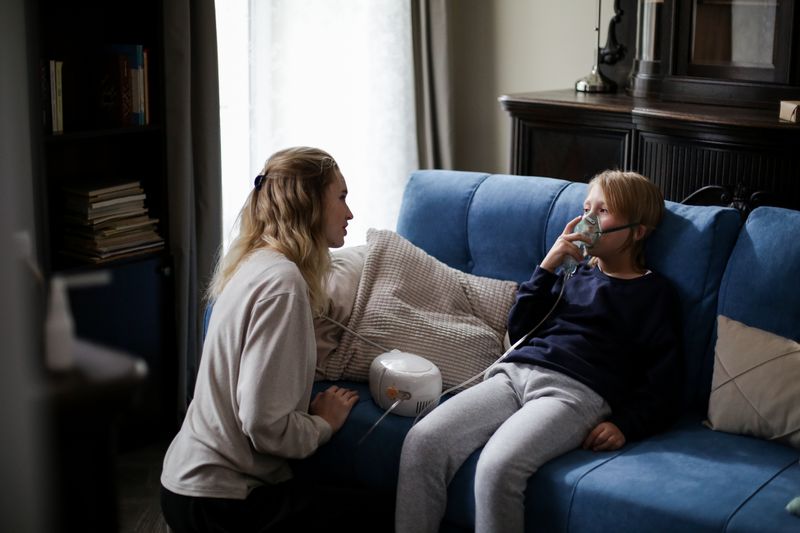
Short-acting beta-2 agonists (SABA): Salbutamol (Ventolin) via inhaler or nebulizer. During attacks, can be given every 20 minutes up to 3 doses.
Controller (Preventive) Medications
- Inhaled corticosteroids (ICS): Cornerstone of treatment. Safe at low doses, does not affect growth.
- Leukotriene antagonists: Montelukast — especially for exercise and allergen-triggered asthma
- Combination therapy: ICS + LABA for moderate-severe asthma
Inhaler Technique
- Ages 0-5: Metered dose inhaler (MDI) + spacer + face mask
- Ages 6+: MDI + spacer (mouthpiece) or dry powder inhaler
- Spacer increases lung delivery by over 50%
- Rinse mouth after ICS (prevents oral thrush)
Asthma Action Plan
- Green zone: Under control — continue daily medications
- Yellow zone: Worsening — use rescue inhaler, contact doctor
- Red zone: Emergency — breathing difficulty not relieved by medication, blue lips — call emergency services
Asthma and Exercise
Children with asthma can and should exercise! Use rescue inhaler 15-20 minutes before exercise, warm up gradually, cover mouth/nose in cold air. Swimming is excellent for asthmatic children.
When to Go to the ER
- No improvement after 3 doses of rescue inhaler
- Difficulty speaking or walking due to breathlessness
- Blue lips or fingernails (cyanosis)
- Rib retractions visible
- Child is extremely agitated or unusually drowsy
Asthma is a controllable condition. With regular follow-up, proper medication, and trigger avoidance, your child can lead a normal life. Our clinic offers asthma assessment and individualized treatment plans.