
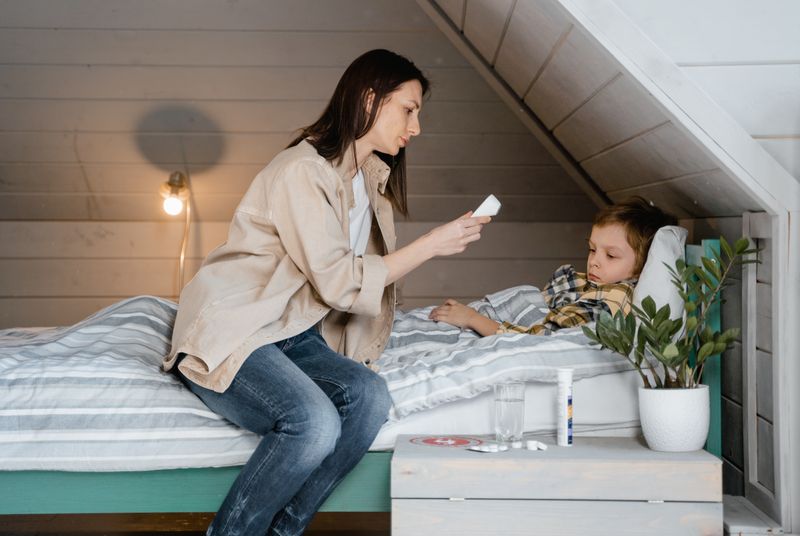
Placing a hand on your child's forehead and feeling unexpected warmth is one of the most anxiety-provoking moments of parenthood. Fever is the body's natural and actually beneficial response to infection — but in certain situations, particularly in very young babies, it can signal something serious. Understanding which fevers can be managed at home and which require immediate medical attention will help you stay calm in the right moments and act quickly when it truly matters.
What Is Fever and Why Does It Happen?
A body temperature of 38°C (100.4°F) or above is medically defined as fever. When the body detects a foreign organism — a virus, bacterium or other pathogen — the immune system triggers a cascade of responses. The hypothalamus, the brain's thermostat, deliberately raises the body's set-point temperature. This elevation is intentional: many pathogens reproduce less effectively at higher temperatures, and immune cells actually function more efficiently in a warmer environment.
The most common cause of fever in children is viral infection — colds, influenza, ear infections, sore throats, gastroenteritis and roseola are frequent culprits. Bacterial infections, while less common, tend to be more serious. A mild fever for one to two days following vaccination is completely normal and is a sign that the immune system is responding as expected.
Normal Body Temperature Ranges
Body temperature varies slightly depending on where it is measured and the time of day. Rectal (rectal) measurement is the most accurate method and is recommended for infants under two years. Armpit (axillary) readings typically run 0.5°C lower than true core temperature — so an armpit reading of 37.5°C or above should be considered a fever.
Reference ranges: rectal 36.6–38°C, oral 36.3–37.5°C, axillary 36–37°C. Digital ear thermometers are convenient for older children but may give less reliable results in infants.
Age-Specific Fever Thresholds: When to Seek Medical Care
Age is the single most important factor in determining how urgently a fever needs medical attention. The same temperature reading that is manageable at home in a three-year-old may be a medical emergency in a young infant.
0–3 Months: Any Fever Is an Emergency
In babies under three months of age, any rectal temperature of 38°C or above requires immediate medical assessment — day or night, weekend or weekday. The immune system in newborns and young infants is immature, and serious bacterial infections such as septicaemia, meningitis or urinary tract infection can present with fever as the only initial sign. Do not wait to see if it comes down — go directly to your paediatrician or emergency department.
3–6 Months: 38.5°C and Above — Same-Day Assessment
Fever in this age group still warrants prompt medical evaluation. A temperature of 38.5°C or above should be assessed by a doctor on the same day. If your baby is feeding well, has wet nappies and seems alert, you may have a few hours to arrange an appointment rather than going straight to emergency — but do not delay beyond the same day.
6–24 Months: 39°C and Above — Medical Review Needed
Below 39°C, if the child is drinking adequately, has wet nappies, has periods of being alert and playful, and responds to fever reducers, home management for 24–48 hours is reasonable. Above 39°C, or if the fever persists beyond 48 hours, or if additional symptoms develop, a paediatric consultation is indicated.
2 Years and Older: Watch the Child, Not Just the Number
In older children, general appearance becomes as important as the thermometer reading. A child with a temperature of 39.5°C who, once the fever comes down, is drinking, playing and making eye contact is reassuring. The same temperature in a child who is limp, cannot be consoled, refuses all fluids or is difficult to wake warrants urgent assessment regardless of whether the temperature itself is "dangerously high."
Home Management of Fever
The goal of treating fever at home is not to eliminate it entirely but to keep your child comfortable, maintain hydration and monitor for warning signs. Fever-reducing medication should be used when the child is clearly distressed or when the temperature exceeds the age-appropriate threshold — not automatically for every degree of temperature rise.
Paracetamol (Acetaminophen)
Safe from birth (under medical guidance for newborns). Dose: 10–15 mg/kg every four to six hours, maximum five doses in 24 hours. Always calculate the dose based on your child's current weight, not their age. Use the measuring syringe provided — kitchen spoons are not accurate.
Ibuprofen
Suitable for children 6 months and older only. Dose: 5–10 mg/kg every six to eight hours. Ibuprofen has the advantage of a longer duration of action and also reduces inflammation. It should be used cautiously or avoided in children with stomach problems, kidney disease or dehydration.
Important: Never give aspirin to a child or teenager. Aspirin is associated with Reye syndrome — a rare but life-threatening condition affecting the liver and brain — in children who have had viral infections.
Physical Measures
Lukewarm (not cold) wet cloths applied to the forehead, armpits and neck can provide temporary comfort. Do not use cold water, ice packs or alcohol rubs — these can cause shivering which paradoxically raises the core temperature, and alcohol rubs are absorbed through the skin and are toxic. Dress your child lightly — wrapping a feverish child in heavy blankets traps heat and worsens the fever. Encourage frequent small amounts of fluid throughout the day.
Febrile Seizures: What to Know
Febrile seizures occur in approximately 2–5% of children between the ages of six months and five years. They are triggered by the rapid rise in body temperature rather than by its absolute height, which is why they can occur even with moderate fevers. Witnessing a febrile seizure is frightening, but simple febrile seizures — those lasting less than five minutes, involving the whole body, occurring only once during a fever — do not cause brain damage and do not increase the risk of developing epilepsy in the vast majority of children.
If your child has a febrile seizure: stay calm, place them gently on their side on a soft surface, clear the area of anything dangerous, do not put anything in their mouth and do not restrain the movements. Time the seizure. Call emergency services (112 in Turkey) if the seizure lasts more than five minutes, if the child does not regain consciousness, or if seizures recur. Even if the seizure resolves quickly, see a paediatrician the same day for evaluation.
Warning Signs: Seek Emergency Care Immediately
Regardless of temperature level, seek immediate emergency care if your child shows any of the following:
- Any fever in an infant under three months of age
- A stiff neck, severe headache or unusual sensitivity to light
- A rapidly spreading, purple or dark red rash that does not fade when pressed with a glass (potential meningococcal disease)
- Difficulty breathing, very rapid breathing, or flaring nostrils
- Blue discolouration of the lips or fingernails
- Extreme difficulty waking, unusual limpness or confusion
- Refusal of all fluids for more than 8 hours
- No wet nappy or urine for 8 hours or more
- Fever lasting more than 5 days without a diagnosed cause
Common Questions About Fever
Can a fever cause brain damage? Illness-related fever by itself does not cause brain damage. Brain injury from elevated temperature only occurs at temperatures above 42°C — a level that illness-related fever essentially never reaches. The fear of brain damage from fever, while completely understandable, is not supported by evidence.
Should I wake my child to give fever medicine? Not necessarily. If your child is sleeping peacefully and does not appear distressed, let them sleep — rest is valuable. Wake them if they appear very uncomfortable, are breathing rapidly or are difficult to rouse.
Is fever after vaccination normal? Yes, a mild to moderate fever for one to two days after vaccination is a normal immune response. If the fever rises above 39°C, lasts more than 48 hours or your child seems significantly unwell, contact your paediatrician.
If you are uncertain about your child's fever or simply want peace of mind, Dr. Göze Ercan's clinic in central Marmaris is available for paediatric consultations in both Turkish and English. Early assessment prevents unnecessary worry — and ensures nothing important is missed.