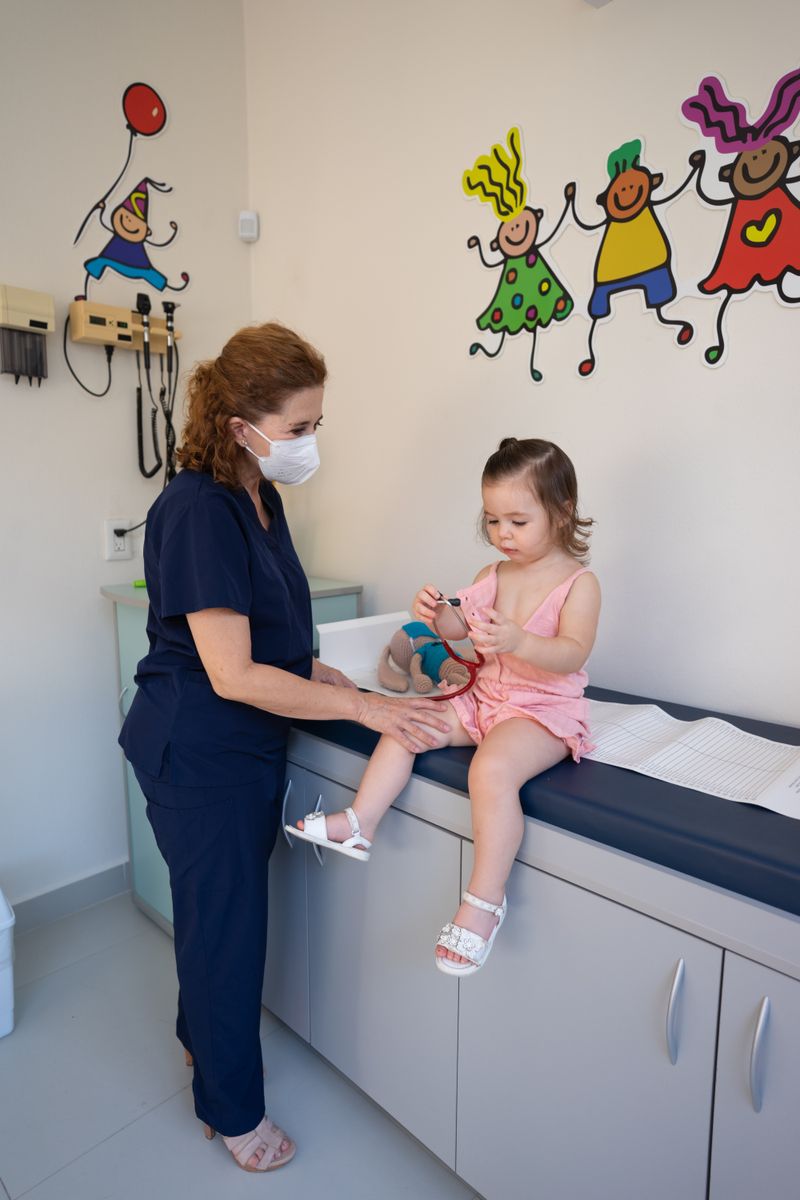
Your baby's first year is the most rapid period of growth and development in their lifetime. Within these 12 months, your baby will learn to hold their head up, sit, crawl, and perhaps take their first steps — embarking on an incredible journey from their first smile to their first word. Remember that every baby develops at their own pace — the timeline below is a general guide.
0-1 Month: The Newborn Period
Your newborn arrives in the world equipped with reflexes: sucking, startle (Moro reflex), grasping, and rooting reflexes are all active.
- Motor development: Can briefly lift head when placed on tummy. Hands are mostly in fists.
- Sensory development: Can see faces at 20-30 cm distance (breastfeeding distance). Recognizes mother's voice and calms down.
- Communication: Crying is the primary communication tool. Develops different crying tones for hunger, discomfort, and tiredness.
Parent tips: Skin-to-skin contact, eye contact, and talking to your baby are the most important stimuli during this period.
2-3 Months: The First Social Smile
This period brings a magical milestone — your baby consciously smiles at you!
- Motor development: Lifts head up to 45 degrees in tummy position. Begins discovering hands; thumb sucking increases.
- Cognitive development: Follows moving objects with eyes. Turns head toward sounds.
- Communication: Cooing sounds begin ("aaa", "goo"). Attempts to imitate facial expressions.
Parent tips: Practice a few minutes of tummy time daily to strengthen neck and back muscles.
4-5 Months: Exploration Begins
- Motor development: Can sit with support. Pushes up on arms to lift chest during tummy time. Reaches for and grasps objects. Brings everything to mouth.
- Cognitive development: Discovers cause and effect (shaking a rattle makes noise). Responds to peekaboo games.
- Communication: Laughs out loud! Begins producing vowel-consonant combinations. Starts responding to their name.
Parent tips: Offer safe toys with different textures. Colorful, noisy toys encourage exploration.
6-7 Months: Sitting and Starting Solids
The sixth month is a significant turning point in many ways:
- Motor development: Can sit without support (usually between 6-7 months). Transfers objects from one hand to the other. Masters rolling (back to front and front to back).
- Cognitive development: Object permanence begins to develop (searches for a hidden toy). Stranger anxiety may begin.
- Nutrition: Time to start complementary foods. The tongue-thrust reflex has diminished, baby can sit with support, and shows interest in food.
Parent tips: You can start with single-ingredient purees or BLW (Baby-Led Weaning). Introduce each new food 3-5 days apart to monitor for allergies.
8-9 Months: Movement and Communication Explosion
- Motor development: Crawling begins (some babies scoot, some bottom-shuffle — all are normal). Pulls to standing using furniture. Pincer grasp (thumb and index finger) starts developing.
- Cognitive development: Understands simple commands ("come", "give"). Enjoys interactive games (pat-a-cake). Puts objects in and out of containers.
- Communication: Repeated syllables like "mama", "dada" (babbling) become prominent. Imitates gestures like waving and clapping.
Parent tips: Home safety is now critical! Install outlet covers, corner protectors, stair gates, and cabinet locks.
10-12 Months: First Steps and First Words
- Motor development: Walks along furniture (cruising). Some babies begin independent walking by 12 months, but not walking until 18 months is also normal. Pincer grasp is mastered — picks up small objects with thumb and index finger.
- Cognitive development: Understands and follows simple instructions. Plays peek-a-boo. Knows the function of objects (holds phone to ear, puts comb to hair).
- Communication: First meaningful words emerge ("mama", "dada", "water"). Pointing with index finger begins — this is a very important communication milestone.
Parent tips: Talk to your baby abundantly, read books together. Name the things they point at. This period lays the foundation for language development.
Weight and Height Tracking
Growth monitoring is the most important tool for confirming healthy development:
- Birth weight: A 5-10% physiological weight loss in the first 3-4 days is normal. Birth weight should be regained within 10-14 days.
- First 6 months: Approximately 600-800 grams of monthly weight gain is expected.
- 6-12 months: Weight gain slows to approximately 300-400 grams per month.
- Height: Babies grow approximately 25 cm in the first year.
- Head circumference: Increases approximately 12 cm in the first year (indicator of brain development).
Growth curves (percentile charts) plotted during regular check-ups show whether your baby is following their own growth trajectory.
Warning Signs: When to See a Doctor
Every baby develops at their own pace, but certain situations warrant evaluation:
- At 2 months: Not responding to sounds, not making eye contact
- At 4 months: Cannot hold head up, not reaching for objects, not smiling
- At 6 months: Not making sounds, not rolling, not grasping objects
- At 9 months: Cannot sit without support, not babbling, not responding to name
- At 12 months: Not crawling or moving in any way, not attempting any words, not using simple gestures (waving, pointing)
Important: Loss of a previously acquired skill (regression) is a serious warning sign at any age and should be evaluated immediately.
Development Check-ups and Vaccination Schedule
Regular doctor visits during the first year are critical for both growth monitoring and vaccinations. Recommended check-up times are: 1 month, 2 months, 4 months, 6 months, 9 months, and 12 months. These visits combine growth measurements, developmental assessment, nutritional counseling, and age-appropriate vaccinations.
If you have concerns about your baby's development or wish to schedule regular follow-up appointments, please contact our clinic. Early identification of developmental differences and early intervention yield the best outcomes.